

“I still remember one of my very first clients. He had been copy trading on Bybit and made over 4,000 USDT in just a few months. The excitement didn’t last long, though—because soon after, a letter from the tax office arrived. His first question to me was: ‘Do I really have to pay taxes on copy trading profits? And if yes, how do I even report them?’
I’m David, your guide here at BestCopyTrading.com. In this article, I’ll walk you through everything you need to know about copy trading taxes—from the basics of whether profits are taxable, to how different countries handle them, and what practical steps you should take to stay compliant.
Copy trading can be a great way to learn and earn, but remember: profits only count when they are both realized and reported properly. Let’s make sure you keep more of your gains—and avoid nasty surprises from the taxman.”
Table of Contents

Why Taxes Matter in Copy Trading
Last year, I spoke with a young investor named Alex. He had just discovered copy trading, followed a top trader on MEXC, and proudly showed me his results: a 20% ROI in two months. He felt like he had finally cracked the code to “easy money.” But the excitement quickly turned into confusion when a letter from the tax authority landed in his mailbox. Suddenly, his profitable trades came with a new challenge: “Are copy trading profits taxable?”
The short answer is yes. Copy trading taxes apply in nearly every country because regulators treat these profits the same as if you had placed the trades yourself. Whether your platform is automated or manual doesn’t matter—the outcome (gains or losses) is still considered taxable income.
Failing to report these earnings can create more than financial risk:
- 💸 Penalties and fines for underreporting.
- ⚠️ Legal complications that may damage your record.
- ❌ Loss of financial credibility, which can affect loans or even future trading accounts.
Governments see copy trading as real trading activity, simply executed through automation. This is why most regulators—from the U.S. to the UK, Australia, and many other regions—classify copy trading profits as taxable.
Understanding Taxes on Copy Trading Profits
When Anna from the UK started copy trading on eToro, she followed a steady long-term investor. After three months, she had earned £2,000 in profit. Anna thought it was “extra cash” and moved on — until she received a notice from HMRC. The profit was classified as capital gains tax (CGT), the same as if she had sold stocks.
On the other side of the Atlantic, John in the United States copied futures trades on Bybit. His accountant explained that the IRS doesn’t treat these profits as casual income. Instead, they must be filed as trading income on Schedule D, just like any other investment gains.
These two stories highlight an important truth: copy trading profits are taxable income in most countries, but the way they’re classified can vary:
- Capital Gains Tax (CGT):
In many jurisdictions (UK, EU, Australia), profits from selling assets or withdrawing copy trading gains are treated under CGT rules. - Income Tax:
If copy trading is your main activity, or if authorities consider it “active business,” profits may be taxed as regular income, potentially at a higher rate. - Platform & Transaction Fees:
Some countries allow deductions for copy trading fees, subscription costs, or platform commissions. This can reduce your taxable amount if documented properly. - Asset-Specific Rules:
- Crypto: Often a grey area. Some governments treat it as property (CGT applies), others as currency.
- Forex: May be subject to financial transaction tax or income rules.
- Stocks: Usually taxed under capital gains once sold or realized.
👉 Whether it’s Anna in the UK or John in the US, the lesson is the same: profits from copy trading are not “free money.” They fall under the tax system — either as capital gains, income tax, or both.
Country-Specific Tax Rules (2026 Update)
When you’re copy trading across borders, things can get complicated fast. Take Anna, a European investor. She copies US traders on Bybit, follows equity traders on eToro in the UK, and tests forex strategies on Exness while traveling in Australia. By year-end, Anna realizes her profits are taxed under different rules in every country.
Here’s how copy trading tax is handled in 2026:
- United States (copy trading tax in USA):
IRS treats profits as taxable income. You must file Form 8949 & Schedule D. Short vs long-term gains apply depending on holding period. - United Kingdom (copy trading tax in UK):
HMRC splits between Capital Gains Tax (CGT) and Income Tax. Occasional trading → CGT. Frequent copy trading (business-like) → Income Tax. - Australia:
The ATO sees copy trading as regular trading → CGT applies. Active traders may also owe Income Tax. Losses may be deductible. - India (copy trading tax in India):
SEBI has not formally approved copy trading, but profits are still taxable as “income from other sources.” - Vietnam:
No clear law yet. Most tax advisors suggest declaring as miscellaneous income to stay compliant.
Quick Tax Overview (2026)
| Country | Tax Type | Notes |
|---|---|---|
| USA | Capital Gains + Income | IRS – Form 8949, Schedule D |
| UK | CGT / Income Tax | HMRC – depends on frequency |
| India | Not regulated, taxable | “Other income” under IT Act |
| Australia | CGT + Income Tax | Losses deductible in some cases |
| Vietnam | Misc. income | No clear law, still taxable |
👉 Key lesson from Anna’s story: copy trading profits are taxable almost everywhere — but the classification (capital gains vs income) depends on local law.
How to Report Copy Trading Profits
Many traders celebrate when they see a positive ROI, but forget that the next step is learning how to report copy trading income correctly. Tax authorities treat these profits just like any other trading gain, which means you must file taxes on copy trading carefully to avoid penalties.
Step 1 – Export Your Trading Data
Before you can report, you need accurate records. Different platforms offer various ways to export your trading history:
- Bybit → CSV exports with detailed PnL
- eToro → ready-made annual tax report
- Binance → Excel spreadsheets with transaction history
Keeping this data organized ensures your taxable income is transparent.
Step 2 – Classify Your Copy Trading Income
Depending on your jurisdiction, your copy trading profits may fall into:
- Capital Gains Tax (CGT): when you close a position or withdraw funds
- Income Tax: if copy trading is treated as ongoing business activity
Understanding this classification is crucial because it decides the rate you’ll pay.
Step 3 – Apply Exchange Rates for Crypto Trades
If you trade crypto, remember that authorities often require you to report in your local currency. That means converting each gain using the exchange rate on the trade date.
Step 4 – File Your Copy Trading Taxes with the Correct Forms
Each country has its own system for filing taxes on trading income:
- US: IRS Form 8949 + Schedule D
- UK: Self Assessment return, section SA108 for CGT
- Australia: Include in annual income tax return, with CGT schedules
- India & Vietnam: Typically filed as “Other income” under tax laws
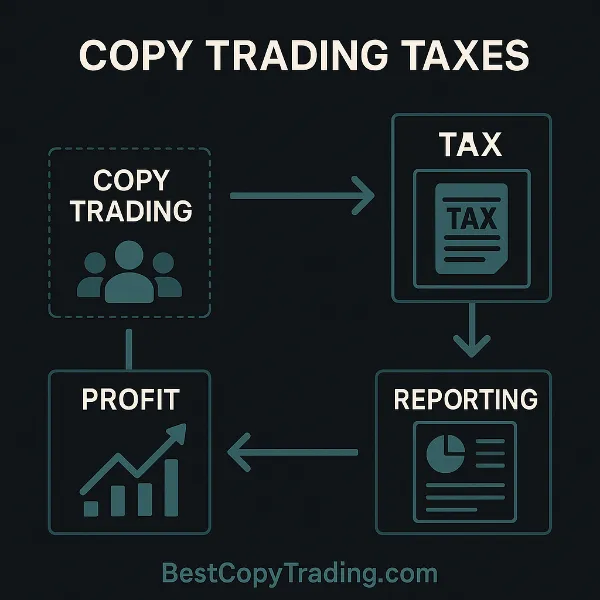
Storytelling: Accountant vs DIY Investor
- Emma in the UK uses an accountant. She simply hands over her eToro tax report, and the accountant integrates it into her return. Stress-free, but with extra cost.
- Alex in the US prefers the DIY route. He exports Bybit CSV files, categorizes each trade in Excel, and enters them into Form 8949 himself. It takes longer, but he saves on fees and understands his taxable income better.
👉 Both approaches prove that whether you hire help or do it yourself, the most important thing is that you report copy trading profits accurately.
Copy Trading Platforms With Built-In Tax Reporting Tools
For investors, one of the biggest challenges is not just earning profits but documenting them correctly. Some copy trading tax reporting tools are built into platforms, while others require manual effort. Choosing tax-friendly copy trading platforms can save hours at the end of the fiscal year.
eToro – FCA-Standard Tax Reports
eToro stands out for its detailed annual reports designed to meet FCA compliance. This makes filing taxes smoother for UK and EU traders who need verified summaries of capital gains and fees.
Bybit – CSV Export for Every Trade
Bybit allows users to export CSV files that include trade-by-trade profit and loss details. While not a full tax statement, these files integrate easily with spreadsheets or third-party tools.
Binance – API Integration With Koinly & CoinTracking
Binance supports direct API connections with leading tax software such as Koinly and CoinTracking. For active crypto copy traders, this feature reduces manual work and helps keep taxable income in order.
MEXC & Bitget – Manual Tracking Still Required
Unlike the platforms above, MEXC and Bitget do not yet offer standard tax reports. Traders often need to export raw trade history and calculate taxes manually, which can be time-consuming.
👉 Looking for the most tax-friendly copy trading platforms? See our full comparison here: Best Copy Trading Platforms.
Common Mistakes Investors Make With Copy Trading Taxes
Even smart traders can trip up when it comes to tax reporting. Many of the most costly copy trading tax mistakes don’t come from the trades themselves, but from what investors fail to record or report. Here are the most common errors — and how to avoid tax issues in copy trading.
1. Failing to Record Trade History
Too many followers rely on platforms to “store everything forever.” But if you don’t keep your own CSV exports or statements, it becomes almost impossible to prove your profits (or losses) to tax authorities.
2. Assuming Crypto Copy Trading Is Tax-Free
Some investors mistakenly believe that crypto trading — especially when copied — is anonymous. In reality, most major platforms run full KYC checks and may share data with regulators.
💡 Storytelling example: A European trader once thought his Binance copy trades were invisible. A year later, he received a notice from the tax office because Binance had already provided KYC-linked transaction data.
3. Forgetting Transaction Fees
Every platform charges fees — spreads, commissions, or performance fees. Forgetting to include these in your tax calculations can inflate your taxable income and cause overpayment or penalties.
4. Ignoring Tax Law Updates
Tax rules change fast. Countries like Australia and the UK regularly update their treatment of crypto and trading profits. Failing to adapt means you may miss deductions or face fines.
Tips to Stay Compliant and Save on Taxes
Managing your returns is only half the job. Knowing how to handle the tax side is what protects your gains in the long run. The following tax tips for copy trading will not only keep you compliant but may also help you reduce copy trading taxes.
1. Use Specialized Tax Software
Tools like Koinly, CoinTracking, or TurboTax automate much of the process. They sync with platforms such as Binance or Bybit, categorize trades, and calculate capital gains and losses.
2. Keep All Records Organized
Always save invoices, monthly statements, and CSV exports from your trading platforms. These serve as evidence in case of an audit, and they also make reconciliation easier.
3. Offset Losses to Lower Copy Trading Taxes
Most jurisdictions allow you to offset trading losses against profits. By declaring losses properly, you can reduce your taxable income.
💡 Storytelling example: A UK client once came to a tax advisor at BestCopyTrading.com after paying too much tax. By documenting a £1,200 loss from copy trading alongside £6,000 in gains, the client reduced their tax bill by nearly 20%.
4. Separate Trading Accounts
Keeping your copy trading account separate from your personal investment or savings accounts makes reporting cleaner and less prone to errors.
👉 Pro tip: Review your tax position quarterly, not just once a year. Small adjustments early on can make a big difference when it’s time to file.
FAQs About Copy Trading Taxes
Yes. In most countries, profits from copy trading are considered taxable income. Depending on your jurisdiction, they may fall under capital gains tax (CGT) or regular income tax rules.
USA: IRS requires reporting via Form 8949 & Schedule D.
UK: HMRC may apply CGT or Income Tax depending on trading frequency.
India: Even without SEBI regulation, copy trading profits are still taxable as “other income.”
eToro offers FCA-compliant reports.
Binance integrates with Koinly & CoinTracking.
Bybit supports CSV export.
MEXC and Bitget require manual tracking.
Always report profits, even if made on crypto platforms. Keep detailed records (CSV, API exports), use tax software, and consult a local accountant. Staying compliant helps you avoid tax penalties and interest charges.
Final Thoughts – Navigating Copy Trading Taxes in 2026
Copy trading can be an exciting way to grow your portfolio, but every profit comes with a responsibility: taxes. Whether you’re copying trades on crypto, forex, or stock platforms, governments treat these gains as taxable income. Failing to report them correctly can lead to penalties that easily outweigh your returns.
The key takeaway? Treat copy trading like any other investment: keep accurate records, understand your country’s tax laws, and don’t ignore fees or losses that can offset your bill. With the right tools and awareness, taxes don’t have to be overwhelming.
👉 Choose platforms with clear tax reports and transparent data to make life easier.
See our expert guide here: Best Copy Trading Platforms
Key Takeaways – Copy Trading Taxes 2026
- ✔️ Copy trading profits are taxable in almost every country – either as capital gains or income tax.
- ✔️ Always export your trade history (CSV, Excel, or tax reports) for accurate filing.
- ✔️ Use tax software like Koinly or CoinTracking to simplify reporting and reduce errors.
- ✔️ Take advantage of loss offset rules to lower your taxable income.
- ✔️ Choose platforms with tax reporting features to save time and stay compliant.
💬 Join our BestCopyTrading Telegram community for daily tips, tax guides, and trader updates. 👉 Join Telegram Now


